The first weeks after Achilles tendon surgery involve protection rather than normal walking: your ankle stays pointed downward, swelling is managed, and weight-bearing follows a staged plan. By the end, you will know what each recovery phase involves, which symptoms need prompt review, and why running, driving and sport depend on function rather than the calendar alone.
Key takeaways
- Keep the operated leg elevated and follow weight-bearing instructions during the first two weeks.
- Progress from splint to walking boot only when your surgeon confirms wound healing and tendon protection.
- Use physiotherapy milestones to guide movement, strength, balance and return to sport.
- Seek urgent advice for worsening pain, fever, wound drainage, calf swelling or breathing difficulty.
The first 48 hours and the first two weeks
The first 48 hours after surgery usually involve discharge in a splint or cast, prescription pain medicine, and transport home by an adult. Do not drive yourself. Take pain medicine as directed, before pain becomes severe, and expect swelling around the ankle and foot.
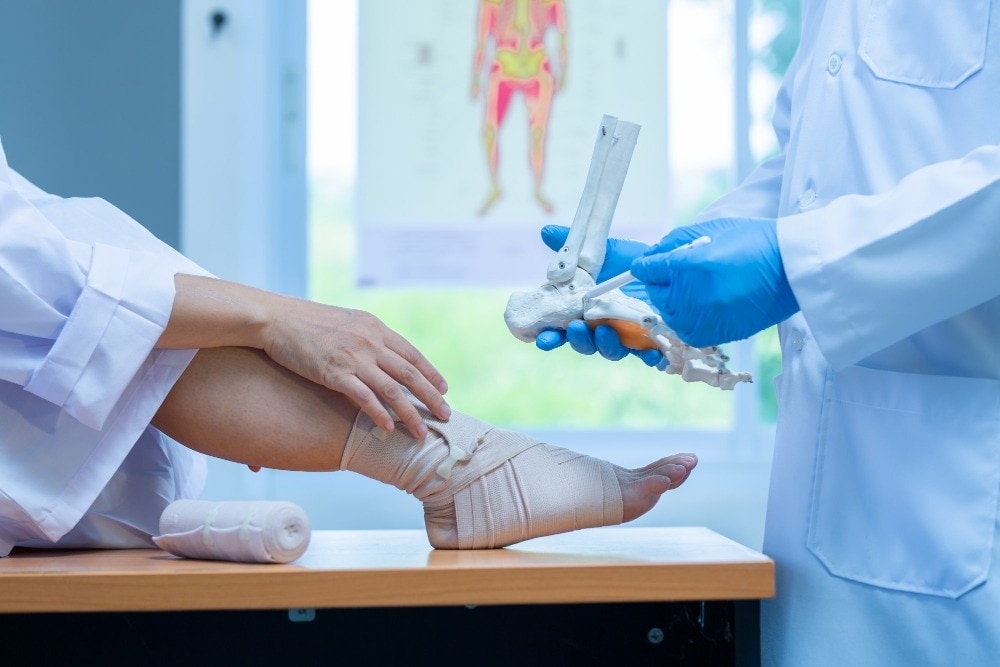
The Achilles repair splint holds the ankle in plantar flexion, also called an equinus position, with the toes pointing downward. This plantar-flexed position after Achilles repair reduces tension on the repaired tendon.
Keep the leg elevated above heart level, including during rest; sleep on your back with pillows supporting the calf and splint, not pressing behind the heel.
Protect the repair at home:
- Use crutches exactly as taught and remain non-weight-bearing for the period prescribed, commonly about two weeks. Accidental weight-bearing means putting your foot down to catch yourself, stand, or transfer; stop, return to the prescribed position, and tell the surgical team if it caused pain, a pop, or sudden swelling.
- Keep the dressing and splint dry. Sponge-bathe until the team permits showering; do not remove or loosen immobilisation or stretch the ankle upward yourself.
- Check visible dressing edges for fresh or increasing drainage without opening the dressing.
- Contact the surgical team about uncontrolled pain, excessive tightness, numbness, pale or blue toes, coldness, or worsening circulation changes.
Swelling and soreness are expected during early Achilles tendon surgery recovery. Seek prompt advice if the splint feels dangerously tight or symptoms escalate rather than settle.
Weeks 2 to 8: moving from a splint to a walking boot
At the review around 10–14 days, the surgical team checks the Achilles incision, swelling and drainage, then removes stitches or staples when the wound is ready. Swelling, skin problems or delayed healing can postpone removal and delay the next stage.
A common Achilles surgery weight bearing plan keeps you non-weight-bearing for about two weeks, then moves you into a removable walking boot after Achilles repair. The ankle remains pointed downward, with heel wedges Achilles boot inserts maintaining a protected position.
| Stage | What you do | What it means |
|---|---|---|
| Splint | Keep weight off and use crutches | The repair remains fully protected |
| Boot transition | Add weight gradually through crutches | Protected loading, not normal walking |
| Later boot phase | Remove wedges in stages | The ankle moves toward neutral under supervision |
Being allowed to load the boot does not mean the tendon has healed. Do not flatten the boot yourself, remove wedges all at once or walk normally before your surgeon permits it; forced upward ankle movement during the first 8–12 weeks can lengthen the healing tendon.
Restrictions change with the repair quality, tendon tissue, associated injury, wound condition and surgeon’s protocol. Follow the specific plan rather than a generic timeline, and continue Achilles incision care by keeping the wound protected and reporting increasing redness, drainage or separation.
Physiotherapy milestones from protected movement to sport
Boot removal marks a change in protection, not the end of healing. Achilles tendon physiotherapy usually begins with protected ankle range of motion and a normalising walking pattern, then builds calf force without forcing the tendon into painful stretch.
- Walk with a progressively normal heel-to-toe pattern, using support until you can avoid a limp.
- Activate the calf with gentle contractions, then seated heel raises before progressing to standing heel raises.
- Add balance work, such as supported two-leg and single-leg standing, when you can control the ankle safely.
- Build toward a controlled single-leg heel raise; increase repetitions, height and load only when movement remains smooth.
- Add progressive resistance with bands, weights and functional drills before impact activities.
Calf weakness after Achilles repair is persistent. Calf size, push-off power and repeated single-leg heel raise quality can lag behind the uninjured side for months, even when ordinary walking feels comfortable.
Return to running after Achilles surgery is commonly considered around 4–6 months, but a calendar date does not provide clearance. Your clinician also checks pain-free hopping, strength symmetry, landing control and tolerance of running-specific loading.
Unrestricted sprinting, pivoting or competitive sport often takes 6–12 months or longer. Pain or swelling after a harder session means the workload needs adjustment; sudden worsening requires review.
Why the operation and tendon history change the timeline
An acute rupture with good tendon ends often follows a more predictable pathway than chronic Achilles tendinopathy surgery. Open Achilles repair recovery can involve greater incision-related wound risk, while minimally invasive Achilles surgery can still irritate nearby nerves and requires careful protection.
| Situation | Tissue and procedure | Rehabilitation implications |
|---|---|---|
| Acute rupture repair | Recent tear; open or minimally invasive repair | Often begins with about two weeks of strict protection, then staged boot loading and gradual range of motion |
| Chronic tendinopathy surgery | Degenerated tendon may need debridement, augmentation or repair | Progression depends on how much healthy tendon remains and which additional procedures were performed |
| Neglected or re-ruptured tendon | Larger gap, poorer tissue, graft or tendon transfer may be needed | Achilles tendon reconstruction recovery is usually slower, with longer protection and delayed strengthening |
These categories do not set your restrictions by themselves. Repair quality, the tendon gap, tissue condition, associated procedures, wound healing and the surgeon’s protocol determine when you bear weight and when the ankle can move upward. A boot-walking milestone does not prove that the tendon has regained strength.
Ask the surgeon to explain the operation and rehabilitation schedule as one plan. A personalised orthopaedic review with Dr. Nihar Modi in Bandra West, Mumbai, can clarify why your proposed repair or reconstruction has specific weight-bearing, boot and physiotherapy rules.
Do not flatten the boot, remove wedges early or force dorsiflexion because another patient’s timeline looks faster.
Related service
Tendons connect muscles to bones and transmit the force needed for movement. View service → |
Red flags, driving, work and the final return to activity
Expected swelling or soreness after walking, prolonged standing or physiotherapy can recur for months and does not by itself indicate failure. Increasing redness, wound separation, drainage, fever or rapidly worsening pain suggests wound infection or another Achilles repair complication; contact your surgical team promptly.
- A sudden pop followed by a new tendon gap
- Loss of push-off or inability to rise onto the toes
- Sudden calf swelling or pain, which can indicate venous thromboembolism
- Chest pain, breathlessness or coughing blood, which requires emergency care for possible pulmonary embolism
| Activity | Resume when | Important restriction |
|---|---|---|
| Driving | You are out of the immobilising boot, no longer taking sedating pain medicine and can perform an emergency stop safely | Achilles surgery driving takes longer after right-sided surgery because it affects braking |
| Sedentary work | You can sit comfortably, elevate the leg and travel safely | Discuss return to work after Achilles surgery around your wound, pain and mobility |
| Physical work | Strength, balance and walking are reliable | Climbing, lifting and prolonged standing usually require more time than desk work |
| Sport | Your clinician confirms pain-free hopping, adequate strength and controlled landings | A continuous tendon can still be too long or weak for normal sport; calf size and push-off power may lag for many months |
Frequently asked questions
What happens during the first 48 hours after Achilles tendon surgery?
You usually leave hospital in a splint or cast with prescription pain medicine. Arrange an adult to take you home, avoid driving, elevate the leg and follow your weight-bearing instructions.
When do you move from a splint to a walking boot?
The change often occurs during the early follow-up period, after the wound is checked. Your surgeon sets the timing and boot position because premature movement or loading can damage the repair.
How does physiotherapy progress after Achilles tendon surgery?
Rehabilitation begins with protected movement and gradually adds walking, calf strength, balance and sport-specific drills. Progress depends on healing, surgical technique, tendon history and clinical assessment.
When can you drive, work or return to sport after surgery?
Driving and work depend on pain, mobility, the operated side, medication use and job demands. Return to sport comes last, after you regain strength, control and sport-specific function.
Which symptoms require urgent medical advice after surgery?
Contact your surgical team for worsening pain, fever, increasing redness, wound drainage, numbness or a loose splint. Seek emergency care for sudden calf swelling, chest pain or difficulty breathing.
Keywords