A meniscus tear can cause pain, swelling, catching or a blocked knee, but an MRI finding alone does not determine the right treatment. By the end, you will understand what the meniscus does, which tears have a realistic chance of healing, how repair compares with tissue removal, and why rehabilitation determines the return of knee function.
Key takeaways
- Seek urgent care for a locked knee or inability to fully straighten it.
- MRI findings and tear location help determine whether repair is possible.
- Preserving meniscal tissue helps distribute loads across the knee joint.
- Follow weight-bearing, range-of-motion and strengthening instructions during rehabilitation.
What the meniscus does—and what its symptoms mean
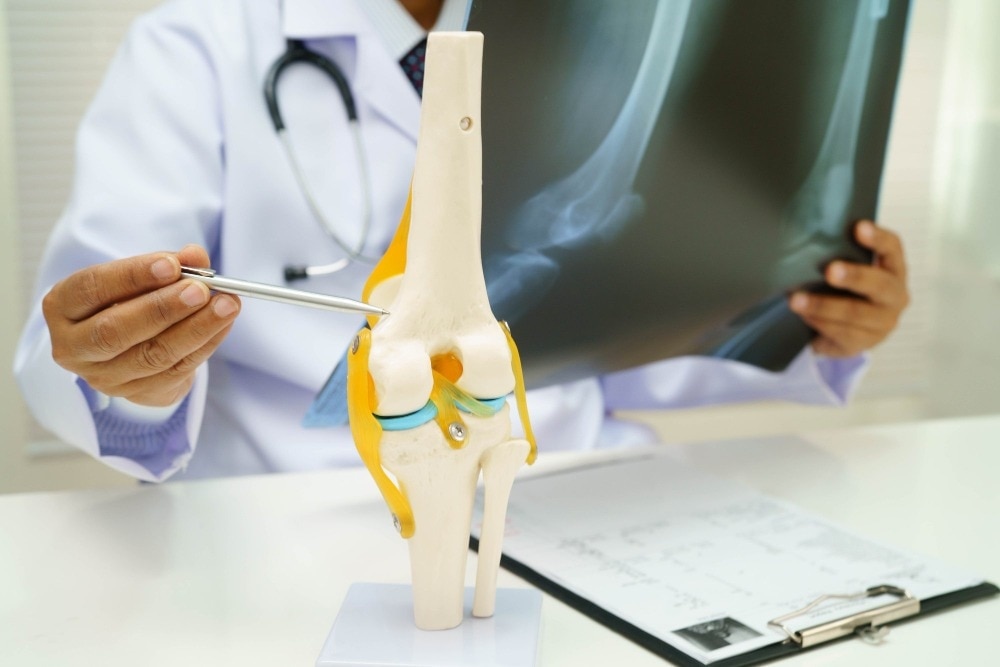
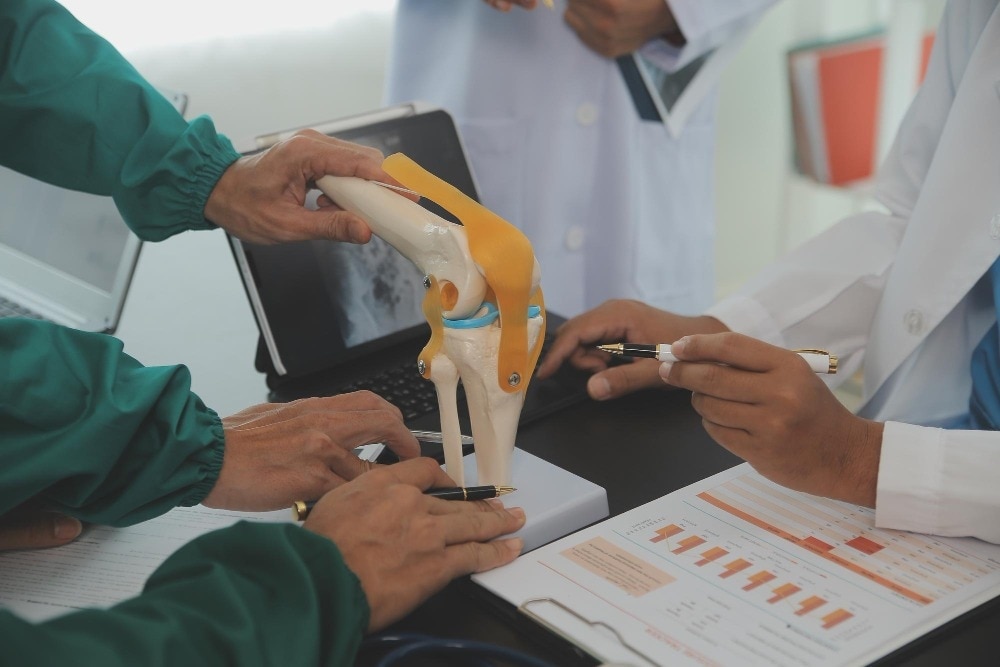
Each knee has two crescent-shaped fibrocartilage pads, the medial and lateral menisci, between the femur and tibia. Their meniscus function is more than cushioning: they spread load, enlarge the joint’s contact area, support stability, assist lubrication and contribute to position sense.
Preserving them helps the knee tolerate walking, squatting and pivoting while reducing stress on articular cartilage.
| Source of symptoms | Clues | What it may indicate |
|---|---|---|
| Meniscus tear | Knee joint-line pain, swelling after activity, catching, locking, or pain with twisting and squatting | A tear, especially when symptoms match an injury and examination findings |
| Articular-cartilage defect | Deep aching, swelling with loading, grinding or pain that is less precisely located | Damage to the smooth cartilage covering the femur or tibia |
| Ligament injury | Giving way, instability after a sudden twist, or pain linked to a specific ligament test | Sprain or rupture of the ACL, MCL, LCL or another stabilising ligament |
| Kneecap problem | Front-of-knee pain during stairs, sitting, kneeling or repeated bending | Patellofemoral irritation or kneecap tracking disorder |
These meniscus tear symptoms do not prove that a meniscus is responsible; similar complaints can overlap. A displaced tear can mechanically block full extension, whereas clicking without objective locking does not establish that surgery will improve knee mobility. Persistent swelling, inability to straighten the knee, or pain after twisting warrants clinical assessment rather than self-diagnosis.
How a suspected tear is confirmed—and when to act quickly
Pain alone does not confirm a meniscus tear. A clinician connects your symptoms to the injury mechanism, then checks for findings that fit a tear rather than an articular-cartilage defect, ligament injury or kneecap problem.
The assessment usually includes:
- Injury history: twisting, squatting, contact, a pop, swelling and whether symptoms began immediately or developed over time.
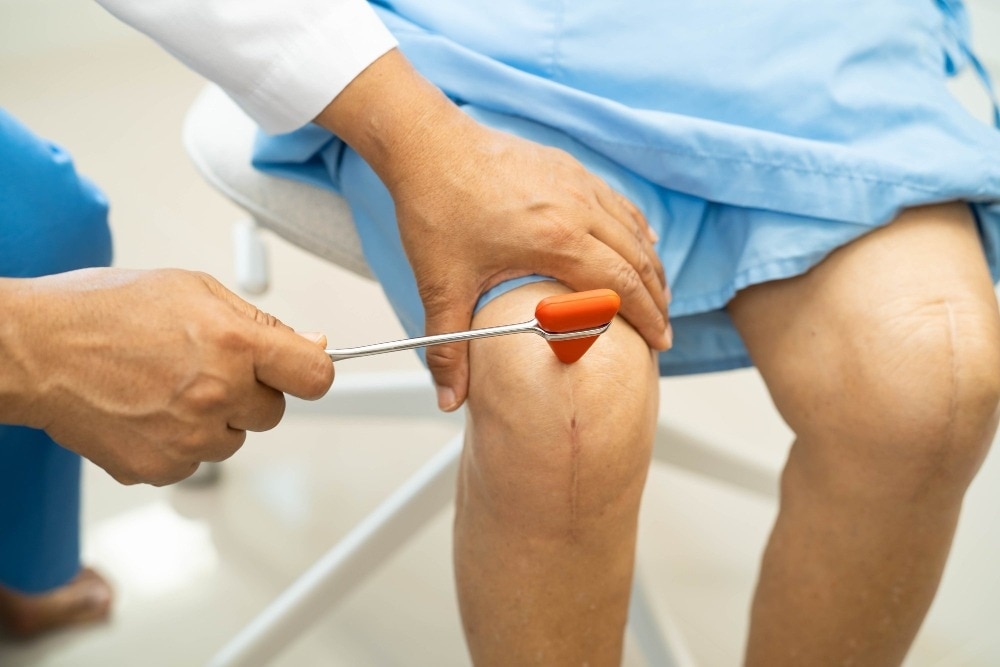
- Meniscus examination: tenderness directly along the joint line and pain during manoeuvres that load or rotate the meniscus.
- Movement testing: active and passive range of motion, especially whether you can fully straighten the knee.
- Ligament stability tests: checks for an ACL or other ligament injury that could explain giving way or change treatment.
A meniscus MRI adds useful detail when the diagnosis or treatment choice remains uncertain. It can show the tear’s location, pattern and tissue quality, plus an associated ACL injury or meniscal extrusion.
Read the report alongside symptoms and examination findings: an MRI tear without objective locking does not prove that surgery will improve mobility, and clicking alone is not a surgical indication.
Seek prompt evaluation for a locked knee, inability to bear weight, major swelling soon after injury or suspected fracture. A displaced bucket-handle tear can fold into the joint and mechanically block extension. That problem differs from pain or occasional clicking and should not wait for a routine assessment.
Which tears are repairable, and how treatment is chosen
A repairable meniscus tear is not defined by its MRI wording alone. A peripheral red-red zone tear has the strongest blood supply; a red-white zone tear has an intermediate healing potential, while a white-white zone meniscus tear lies in largely avascular tissue.
Pattern, tissue quality, stability and whether the tear can be reduced into position also determine repairability.
The choice usually turns on these factors:
| Option | What it involves | When it fits |
|---|---|---|
| Meniscus repair | Suturing and preserving native tissue | Acute, unstable tear that can be reduced and fixed, especially in a vascular zone; recovery is slower and early reoperation risk is higher |
| Partial meniscectomy | Removing the unstable fragment | Irreparable tissue causing persistent mechanical symptoms when repair is unlikely to heal |
| Structured exercise | Progressive strength, mobility and movement training | Degenerative, non-obstructive symptoms in many middle-aged or older adults; outcomes can match arthroscopic partial meniscectomy |
| Observation | Monitoring with activity adjustment and follow-up | Mild symptoms, stable tears or MRI findings without convincing clinical problems |
Age, symptom duration, tear morphology, chronicity, alignment, activity goals and associated injuries such as an anterior cruciate ligament tear all affect the decision. Repair is generally favoured for an acute unstable tear with realistic healing potential because it preserves tissue, even though partial meniscectomy usually recovers faster.
Structured exercise is not a lesser option when degeneration causes pain without true locking.
During an orthopaedic consultation, Dr. Nihar Modi can relate the scan and examination to your mobility goals instead of treating the scan report as the diagnosis.
Related services
may be considered when pain, instability, locking, or loss of function is caused by a structural problem that has not improved with appropriate... View service → |
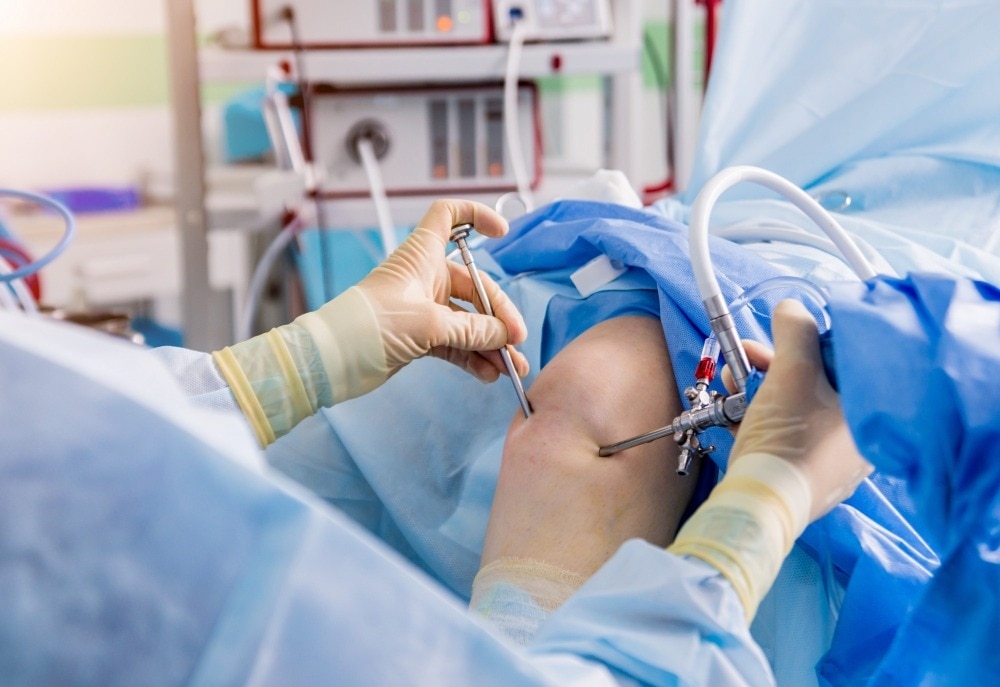
Arthroscopy, commonly called keyhole surgery, is a minimally invasive orthopaedic procedure in which a surgeon uses a small camera called an... View service → |
Why preserving meniscal tissue protects future knee function
Partial meniscectomy can remove an unstable fragment and provide faster early recovery. Repair takes longer and carries a higher early reoperation risk, but it preserves native tissue that spreads load across the knee and reduces stress on articular cartilage during weight-bearing and pivoting.
| Option | Main benefit | Main trade-off |
|---|---|---|
| Partial meniscectomy | Removes unstable tissue; recovery is usually quicker | Less meniscal tissue remains to distribute load |
| Meniscal repair | Preserves tissue and its load-sharing function | Healing takes longer and the repair can fail |
Meniscal preservation matters because removing more tissue reduces the contact area between the femur and tibia. That concentrates force and can contribute to earlier degenerative change, particularly during running, squatting or cutting.
A meniscal root tear deserves separate attention. The root anchors the meniscus so it can convert compression into circumferential “hoop” tension; when that attachment is lost, the meniscus can move outward as meniscal extrusion and lose much of its load-transmitting function.
Complete root disruption can create contact mechanics similar to total meniscectomy, so root repair aims to restore load transmission rather than simply close a visible split.
Repair cannot guarantee normal cartilage health. The risk remains when:
- The repair fails to heal or the tear recurs
- Extrusion persists
- The knee has malalignment or ligament instability
- Articular cartilage was already damaged
Repair is therefore not automatically the best choice: a poorly healing tear, irreparable tissue or symptoms that do not come from the tear can make partial meniscectomy, exercise-based care or observation more appropriate.
How rehabilitation turns a repaired meniscus into usable mobility
Surgery fixes the torn tissue; it does not immediately restore normal strength, motion or movement control. Meniscus repair recovery therefore depends on meniscus rehabilitation, not simply on the stitches holding.
1. Protect the repair first. Your surgeon may prescribe protected weight-bearing and restrict knee flexion, because deep bending can load the repaired segment before it has healed. The tear pattern and fixation determine these limits.
2. Restore motion progressively. Rehabilitation usually prioritises full knee extension before steadily increasing flexion. Loss of extension can produce a stiff, altered walking pattern even when pain is improving.
3. Rebuild control. Quadriceps strengthening supports the knee during standing and stairs, while hip and trunk control reduce unwanted inward collapse and rotation. Balance work then helps your leg respond to uneven surfaces and changing loads.
4. Rehearse demanding movement last. Neuromuscular exercises progress towards running, deceleration, cutting and pivoting only after range, strength and stability improve. Early twisting can overload the repair; quadriceps weakness and poor movement control can limit mobility despite an intact fixation.
A repair cannot follow the faster timetable used after partial meniscectomy. Routine daily walking usually returns well before unrestricted cutting sport. For return to sport after meniscus repair, a criterion-based plan may use about six months as a target when strength, range, stability and functional tests are satisfactory.
Persistent swelling, locking or loss of motion is not a milestone to push through. Contact your treating clinician for reassessment, especially if you cannot fully straighten the knee.
Frequently asked questions
What does the meniscus do in the knee?
The medial and lateral menisci spread load, increase joint contact area, support stability, assist lubrication and contribute to position sense.
How is a suspected meniscus tear confirmed?
A clinician combines your injury history and physical examination with imaging, often including an MRI to assess the tear’s location and pattern.
When should you seek prompt assessment for a possible meniscus tear?
Arrange prompt assessment if your knee locks, cannot fully straighten, gives way repeatedly, or becomes significantly swollen after an injury.
Which meniscus tears can be repaired?
Repair depends on the tear’s location, pattern, blood supply, tissue quality, symptoms and associated knee injuries. Tears near the meniscus edge have better healing potential.
Why preserve the meniscus when possible?
Keeping meniscal tissue helps the knee distribute force and maintain stability, which supports long-term joint function and mobility.