
Severe knee pain does not automatically mean you need a replacement. By comparing your symptoms, examination, X-rays, previous treatments and daily limitations, you can understand when total or partial replacement makes sense, when another treatment is better, and what recovery involves.
Key takeaways
- Replacement suits severe, persistent symptoms that limit walking, sleep or everyday activities.
- Match your symptoms and examination findings with X-rays before deciding on surgery.
- Try suitable non-surgical or joint-preserving treatments when damage and symptoms are limited.
- Ask about implant choice, recovery milestones, risks and the surgeon’s knee-replacement experience.
Which knee problems are suitable for knee replacement?
An X-ray showing arthritis does not by itself justify surgery. Replacement becomes reasonable when pain, stiffness, deformity or loss of function remains substantial despite appropriate non-surgical care and limits walking, stairs, sleep or ordinary activities. Night pain and daily pain matter, but symptoms and examination must match the joint damage.
| Option | What the knee problem looks like | When it fits |
|---|---|---|
| Total knee replacement | Advanced arthritis affects two or more compartments, with marked cartilage loss, deformity or stiffness | Persistent disabling symptoms after physiotherapy, medication, weight management or injections have not provided adequate relief |
| Partial knee replacement | Arthritis is confined to one compartment, while the major ligaments, alignment and remaining cartilage are suitable | Pain and damage remain localised, with a stable, reasonably mobile knee |
| No replacement | Mild or moderate arthritis, pain that does not restrict life, or symptoms arising from the hip, lower back or nerves | Non-surgical treatment has not been fully tried, or the scan looks worse than the symptoms and examination |
If you are researching joint replacement for knee pain in Mumbai, ask an orthopedic doctor for knee pain in Mumbai to explain why total or partial replacement fits your anatomy. Replacement does not create a normal knee: kneeling, deep squatting, stairs or residual stiffness can remain difficult.
If the pain source is elsewhere, replacing the knee will not solve it.
How an orthopaedic assessment confirms whether replacement is appropriate
A proper knee replacement consultation in Mumbai begins with your symptoms, not your X-ray. The surgeon will ask how long pain has lasted, whether it occurs at night or during rest, and whether stairs, walking, sleep, work or ordinary activities have become difficult.
An X-ray showing arthritis alone does not justify surgery; your pain and examination must match the joint damage.
The assessment usually follows these steps:
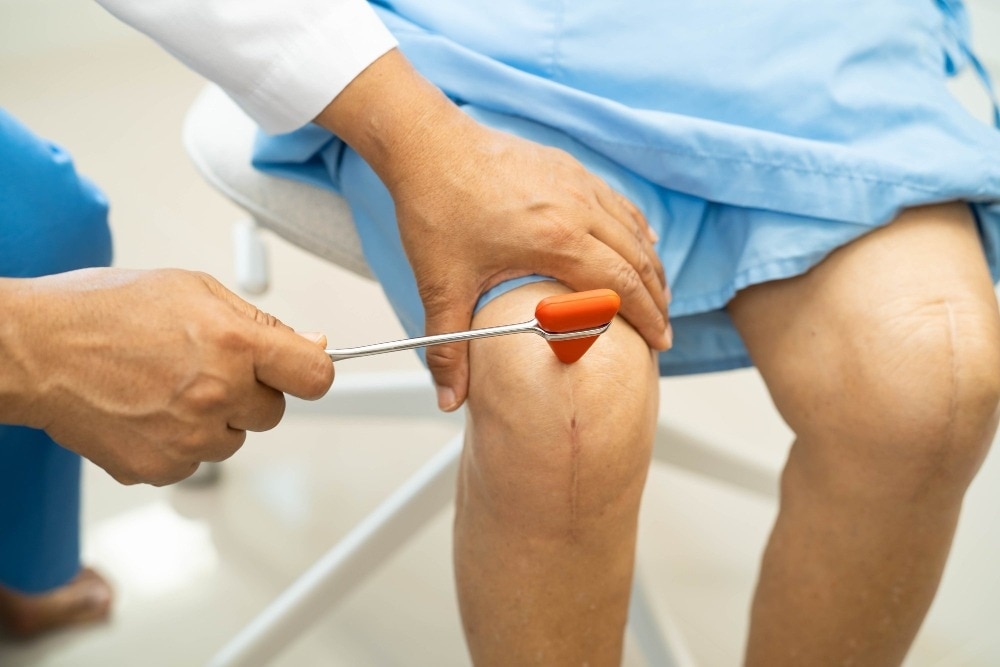
1. The surgeon examines swelling, tenderness, range of motion, stability, leg alignment, walking pattern and deformity. Hip disease, lower-back problems and nerve pain can mimic knee arthritis, so the examination should look beyond the knee.
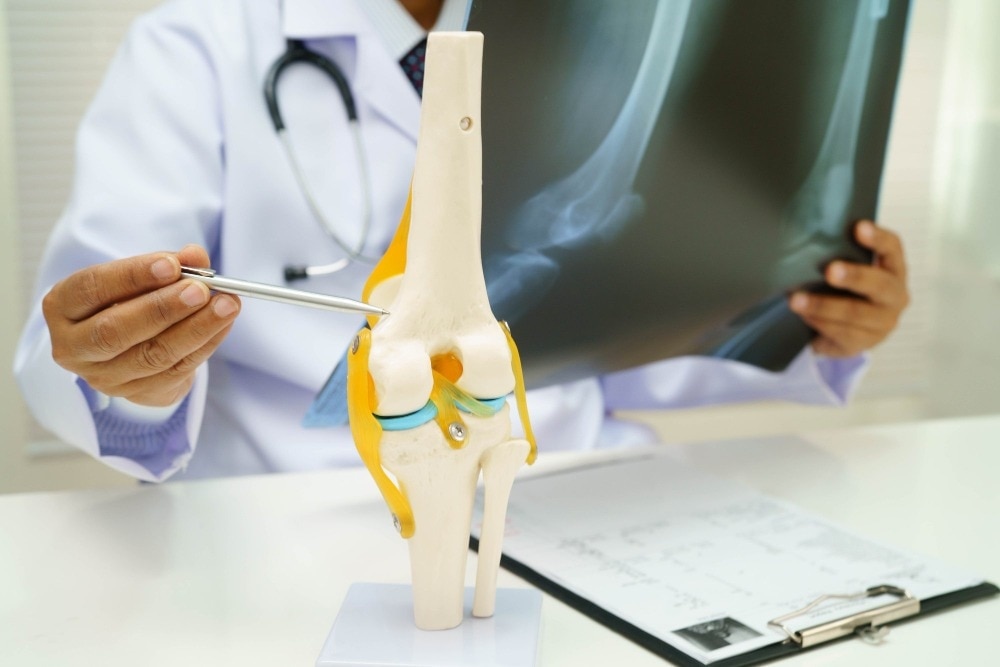
2. Standing, weight-bearing knee radiographs show joint-space loss, bone changes and alignment under load. MRI is usually unnecessary for established osteoarthritis, but it can help investigate an unusual diagnosis, hidden cartilage injury or another pain source.
3. The surgeon reviews physiotherapy, prescribed exercise, weight management, walking aids, medicines and injections already tried. Persistent daily or night pain and severe walking limitation matter more than a failed single treatment.
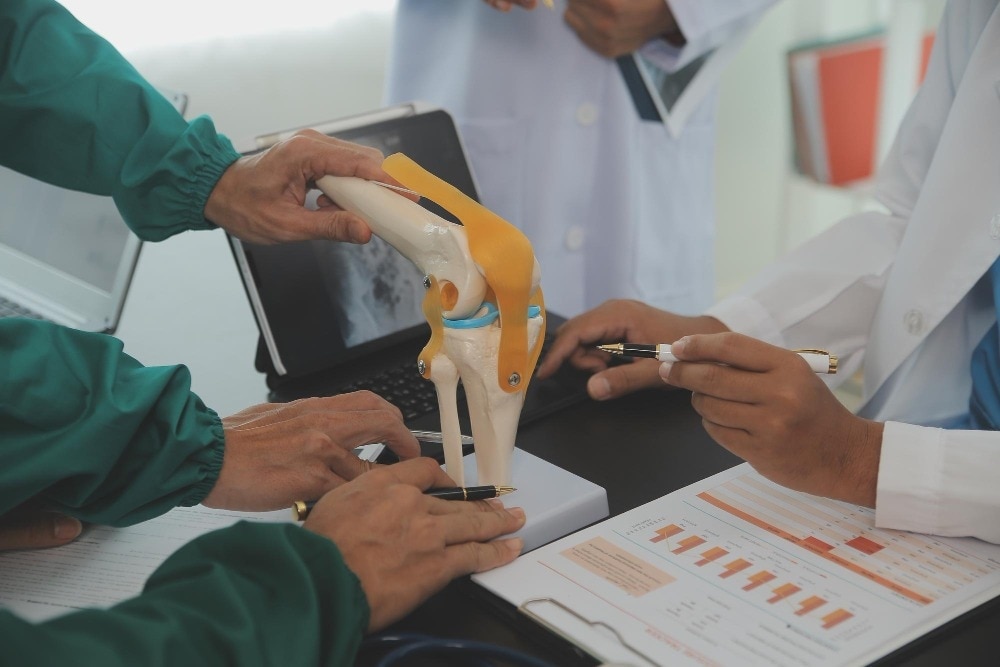
4. The discussion distinguishes partial replacement from total replacement. Partial replacement suits arthritis confined to one compartment with suitable ligaments, alignment and remaining cartilage; disease across several compartments usually favours total replacement.
5. Diabetes, obesity, smoking, heart or lung disease, previous clots, active infection and blood-thinning medicines are checked. Blood tests or medical clearance may be needed before surgery, while postponement is balanced against ongoing disability.
When alternatives are better than replacement
A knee with manageable pain, preserved cartilage or correctable local damage deserves a comparison with replacement before surgery. The choice depends on examination and standing X-rays, not an X-ray finding alone.
| Option | What it can do | When to compare it |
|---|---|---|
| Physiotherapy and exercise | Builds strength, improves movement and reduces load on the joint | Pain is limiting function but the knee is not severely damaged |
| Weight management and walking aids | Reduces joint stress and improves walking safety | Extra body weight or weakness increases pain during daily activity |
| Medicines and selected injections | Controls pain and inflammation; it does not restore lost cartilage | Symptoms remain treatable and medicines are safe for you |
| Osteotomy | Realigns the leg to unload one damaged compartment | Arthritis is concentrated in one area and the rest of the knee remains healthy |
| Cartilage or ligament surgery | Treats a focal cartilage defect or an unstable ligament | Damage is localised, rather than widespread arthritis |
| Arthroscopy | Repairs a displaced meniscus tear or removes a loose fragment | The knee catches or locks because of a repairable mechanical problem |
Arthroscopy is the wrong choice for pain caused mainly by advanced osteoarthritis without true locking. Washing out or trimming an arthritic knee does not rebuild cartilage, correct a fixed deformity or reliably provide lasting pain relief. Ask what problem the procedure will fix, and what happens if it does not.
Joint-preserving surgery also becomes a poor fit when damage spans several compartments; replacement may then offer the more predictable improvement after non-surgical care has failed.
What surgery and recovery involve in everyday terms
Knee replacement removes the worn surfaces of the thighbone and shinbone and replaces them with smooth metal components separated by a durable plastic spacer. The surgeon may also resurface the underside of the kneecap. You receive spinal or general anaesthesia, and the operation commonly takes about one to two hours.
A physiotherapist usually helps you stand and take a few steps on the day of surgery or the following morning. You will begin with a walker or crutches, because pain, weakness and swelling make unaided walking unsafe.
Many patients leave hospital after a short stay once they can walk safely, use the toilet and manage basic exercises.
A realistic recovery usually looks like this:
- During the first two weeks, expect regular exercises, swelling and difficulty sleeping. Keep using your walking aid until your balance and leg control are reliable.
- By weeks four to six, many people walk farther and manage ordinary household tasks, but stairs and uneven ground can still be tiring.
- Around six to twelve weeks, you may return to low-impact activities and work that does not require prolonged standing, subject to your surgeon’s advice.
- Strength and confidence continue improving for several months. Driving requires comfortable control of the pedals, no distracting pain medicine and approval from your surgeon.
Walking early does not mean the knee is fully healed. Follow-up appointments and strengthening exercises matter; stopping rehabilitation when pain eases can leave stiffness and weakness behind. Recovery is slower when health problems, poor fitness or complications interfere.
Risks, implant longevity and choosing the right Mumbai surgeon
Implants do not last forever. Many modern knee replacements function for 15 to 20 years or longer, but younger, heavier or highly active patients have more years in which wear, loosening, instability or infection could lead to revision surgery.
Robotic assistance can improve planning and alignment measurement; it does not guarantee less pain or a longer-lasting implant.
| Risk or trade-off | What to clarify | Why it matters |
|---|---|---|
| Infection, blood clots or bleeding | How your diabetes, weight, smoking, blood thinners and clot history will be managed | These conditions change preparation and monitoring |
| Stiffness, instability or persistent pain | What happens if the knee remains painful after rehabilitation | Replacement does not guarantee pain from the hip, back or nerves will disappear |
| Implant wear or loosening | Expected implant life and your likely lifetime revision risk | A younger patient may face another operation |
| Surgical technique | What robotic or computer navigation adds in your case | Technology is not automatically better than conventional surgery |
Ask the joint replacement surgeon in Mumbai to show your standing, weight-bearing X-rays and explain the diagnosis, alternatives, expected walking limits and rehabilitation schedule. A knee pain orthopedic surgeon in Mumbai should examine your hip, lower back and nerves rather than blame every symptom on the knee; MRI is usually reserved for an unusual diagnosis.
Before choosing, ask about physiotherapy, weight management, walking aids, medicines and injections, plus the surgeon’s plan for active infection or medical optimisation. At a Mumbai orthopaedic practice, including the business, the useful test is whether the consultation answers these questions clearly—not whether it advertises a particular implant.
Related service
Joint replacement surgery is an operation in which damaged joint surfaces are replaced with prosthetic components to reduce pain and improve... View service → |
Frequently asked questions
Which knee problems are suitable for knee replacement?
Replacement is considered for advanced arthritis or other severe joint damage causing persistent pain, stiffness, deformity or loss of function despite appropriate non-surgical treatment.
How does an orthopaedic assessment confirm whether replacement is appropriate?
The assessment combines your symptoms, activity limitations, physical examination and weight-bearing X-rays. The findings must match the damaged part and severity of the knee problem.
When are alternatives better than knee replacement?
Alternatives are preferable when symptoms are manageable, damage is limited, or a treatable cause such as a ligament injury, meniscal problem or localised cartilage defect does not require full joint replacement.
What do knee replacement surgery and recovery involve?
Surgery replaces damaged joint surfaces with metal and plastic components. Recovery involves pain control, wound care, walking practice and structured physiotherapy before returning gradually to ordinary activities.
How long do knee implants last, and how do you choose a Mumbai surgeon?
Implant longevity depends on factors such as activity, weight, alignment and implant performance. Compare the surgeon’s knee-replacement experience, assessment process, hospital support, complication discussion and follow-up plan.
Keywords