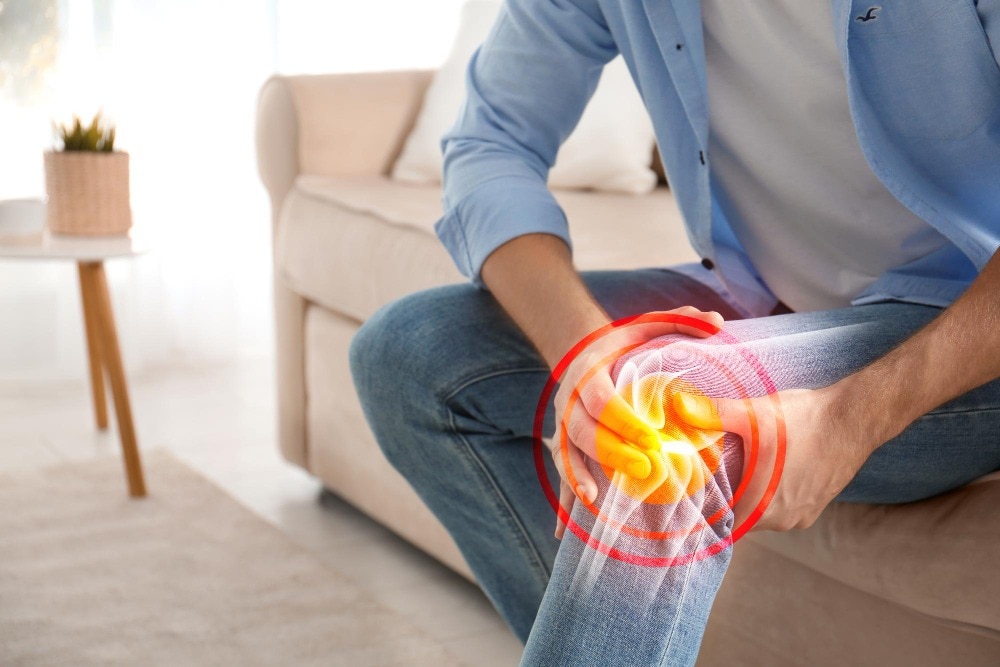
Knee pain after a fall, collision, twist, or road accident can signal anything from a soft-tissue injury to a fracture or dislocation. You will learn which warning signs require emergency assessment, what to do during the first few hours, how clinicians identify the injury, and what information to take to an orthopaedic appointment.
Key takeaways
- Seek emergency care for deformity, numbness, an open wound, or a cold foot.
- Keep weight off the knee and use wrapped ice for 15–20 minutes.
- Expect an examination and X-ray; CT or MRI depends on suspected damage.
- Take injury details, medicines, scans, and insurance documents to your appointment.
Which knee injury symptoms require immediate trauma care?
Seek emergency help now for knee pain after injury if you have any of these warning signs:
- An obvious deformity, an open wound over the knee, or a locked knee that cannot bend or straighten after trauma
- Inability to bear weight, rapidly enlarging swelling, or severe pain out of proportion to what you can see
- A cold, pale, numb, or weak foot, or no detectable pulse at the foot
These findings can indicate a fracture, dislocation, dangerous pressure within the limb, or neurovascular injury. Symptoms alone cannot identify the exact injury, but they should not be managed by waiting for a routine orthopaedic consultation.
| Sign | What it could indicate | What to do |
|---|---|---|
| Visible deformity or open wound | Fracture or dislocation, with possible contamination | Go to a hospital emergency department |
| Cold, pale, numb, weak foot, or absent pulse | Blood-vessel or nerve injury | Call an ambulance immediately |
| Locked knee after impact | Displaced fracture, dislocation, or meniscus injury | Keep it supported and seek urgent assessment |
After a road accident, high fall, forceful collision, or suspected dislocation, choose hospital trauma care in Mumbai rather than private transport if the scene is unsafe or the foot is cold, pale, numb, or weak. Call 112 or 108 where appropriate. Do not force the joint straight or attempt to put it back in place.
What should you do in the first few hours?
Do not walk on the injured leg while arranging emergency evaluation. Treat this as fracture trauma care in Mumbai until a clinician rules out a fracture, dislocation, or circulation problem.
1. Keep the knee supported in the position you found it. Use folded clothing or cushions around the leg, but do not force it straight or bent. Do not massage the knee or attempt to relocate the joint.
2. Apply a cold pack wrapped in cloth for 10 to 15 minutes at a time. Never place ice directly on the skin, because numb tissue can develop a cold injury without warning.
3. If the skin is open, cover the wound with a clean dressing or cloth. Do not push exposed bone or tissue back inside. Tell the emergency team your last tetanus injection date, or say that you do not know it.
4. Remove rings, anklets, tight clothing, or anything constricting the leg before swelling increases. Do not give food or drink if urgent surgery or sedation might be needed.
Call 112 or 108 rather than using private transport if the person has altered consciousness, major bleeding, a suspected dislocation, or is at an unsafe road-accident scene. Choose an ambulance if the foot is cold, pale, numb, or weak; these signs can indicate threatened blood flow or nerve injury.
How is a suspected knee fracture or trauma injury diagnosed?
After arrival, the clinician first inspects the skin for an open wound, bruising, swelling, or deformity. They check foot pulses, colour, temperature, sensation, and strength for blood-flow or nerve problems, then assess knee movement without forcing an unstable joint. They also ask how and when the injury occurred, including the direction of impact or twist.
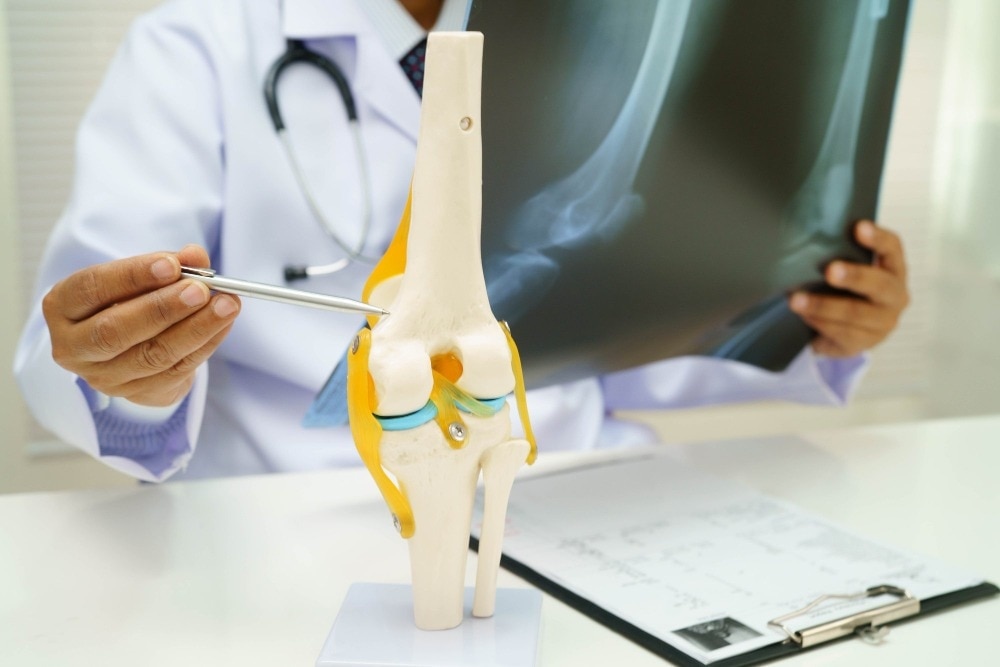
Knee X-rays are usually the first imaging test for suspected bone injury. CT shows complex fracture lines and whether the joint surface is involved. MRI assesses the ACL, meniscus, cartilage, or tendon, and can reveal an occult injury when X-rays do not explain persistent symptoms.
| Finding | What it can suggest | Why it is not a diagnosis |
|---|---|---|
| Immediate swelling and inability to bear weight | Fracture or ligament injury | Both need examination and imaging |
| A pop followed by instability | ACL damage | Other structures can produce similar symptoms |
| Catching or locking | Meniscus injury | A loose fragment or swelling can also restrict movement |
| Visible kneecap displacement | Patellar dislocation | The joint still needs circulation and imaging checks |
| Local tenderness or bruising | Soft-tissue injury | Fractures can also cause these signs |
An orthopedic doctor for knee pain in mumbai confirms the injury through examination and imaging, not symptoms alone. Persistent pain after apparently normal X-rays can require MRI or CT based on the examination findings.
What treatment might a knee fracture need?
A fracture of the patella, distal femur, or upper tibia does not automatically require surgery. The plan depends on displacement, joint-surface involvement, limb alignment, stability, open-wound contamination, and associated ligament, nerve, or blood-vessel injury.
- Non-operative care suits a fracture whose alignment and stability are acceptable. Treatment uses a brace or cast, activity restrictions, crutches, protected weight-bearing, repeat X-rays, and rehabilitation. Losing position on a later X-ray can change the plan.
- Reduction means realigning displaced bone. Sedation or anaesthesia may be needed, particularly when pain or muscle spasm prevents safe correction. After reduction, clinicians immobilise the knee and repeat imaging to confirm that alignment holds.
- Surgical fixation uses plates, screws, wires, or other implants to restore alignment or stabilise an unstable joint surface. It becomes more important when the fracture enters the joint, the bones are significantly displaced, alignment is poor, or the knee remains unstable after reduction.
Surgery can provide better alignment and a clearer structural plan, but it brings wound problems, infection risk, stiffness, and a demanding rehabilitation period. Avoiding an operation avoids those burdens, yet prolonged immobilisation can cause stiffness, muscle loss, delayed return to weight-bearing, or loss of fracture position.
Ask for an individual assessment rather than assuming one treatment from the phrase knee pain fracture treatment in Mumbai.
What should you take to an orthopaedic appointment in Mumbai?
Take a clear injury timeline and your medical records; this makes an orthopaedic appointment more efficient after emergency risks are addressed.
- Mechanism of injury, exact time, and direction of the twist or impact
- Whether you heard a pop, when swelling began, and whether you could bear weight immediately and later
- Previous knee scans and reports, prior injuries or surgery, current medicines, drug allergies, and tetanus information for an open wound
| Situation | What to bring or do | Why it matters |
|---|---|---|
| Road accident | Police, hospital, and insurance documents when available | Supports records and claims |
| Workplace injury | Hospital, employer, and insurance documents when available | Helps coordinate reporting and cover |
| Open wound | Tetanus details and the wound-treatment record | Guides wound and infection decisions |
| Persistent symptoms | A symptom timeline and all imaging | Shows change since the injury |
Do not delay emergency treatment to collect paperwork. Choose trauma-capable fracture trauma care in Mumbai first if the knee is deformed, open, locked, rapidly swelling, impossible to bear weight on, or the foot is cold, pale, numb, weak, or pulseless.
A specialist orthopaedic service in Bandra West can review X-rays or CT scans, arrange MRI when clinically indicated, check alignment and circulation, and coordinate immobilisation, fracture follow-up, or rehabilitation. After red flags are excluded, schedule an orthopedic doctor for knee pain in Mumbai for persistent pain, swelling, instability, locking, or difficulty returning to normal walking.
Related services
Knee Surgery may be considered when pain, instability, locking, or loss of function is caused by a structural problem that has not improved with appropriate... |
Fracture & Trauma Care Fractures are breaks or cracks in bone that can occur after falls, sports injuries, road traffic accidents, direct blows, or other significant... |
Frequently asked questions
Which knee injury symptoms require immediate trauma care?
Seek emergency help for a visibly deformed knee, an open wound over the joint, inability to bear weight, severe swelling, numbness, a pale or cold foot, or loss of movement after a significant impact.
What should you do in the first few hours after a knee injury?
Keep weight off the knee, avoid forcing it straight or bending it, support it in a comfortable position, and apply ice wrapped in cloth for 15–20 minutes at a time. Seek urgent care for warning signs.
How is a suspected knee fracture or trauma injury diagnosed?
An orthopaedic clinician checks alignment, swelling, tenderness, stability, circulation, sensation, and movement. X-rays assess bone injury; CT gives more detail for complex fractures, while MRI evaluates ligaments, menisci, and cartilage.
What treatment might a knee fracture need?
Treatment depends on fracture location, displacement, joint involvement, skin injury, and stability. Options include a brace or cast, crutches, pain control, physiotherapy, manipulation, or surgery with plates, screws, or other fixation.
What should you take to an orthopaedic appointment in Mumbai?
Take prior X-rays or scans, the injury date and mechanism, a list of medicines and allergies, medical records, identification, and insurance documents. Note swelling, bruising, numbness, and whether you can bear weight.
Related services
Sports Injury Treatment Sports injuries can affect ligaments, tendons, muscles, cartilage, bones, and joints. |
Ligament reconstruction is a surgical procedure used to restore stability when a damaged ligament cannot provide adequate functional support. View service → |
Fracture fixation is a surgical method used to stabilise a broken bone when non-operative treatment is unlikely to provide adequate alignment,... View service → |
Keywords