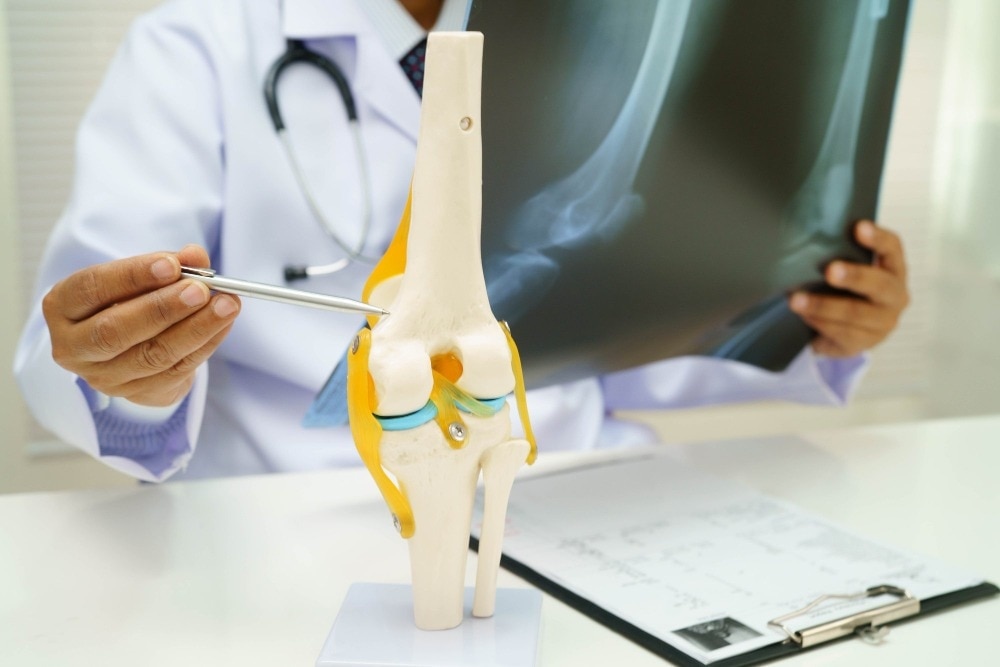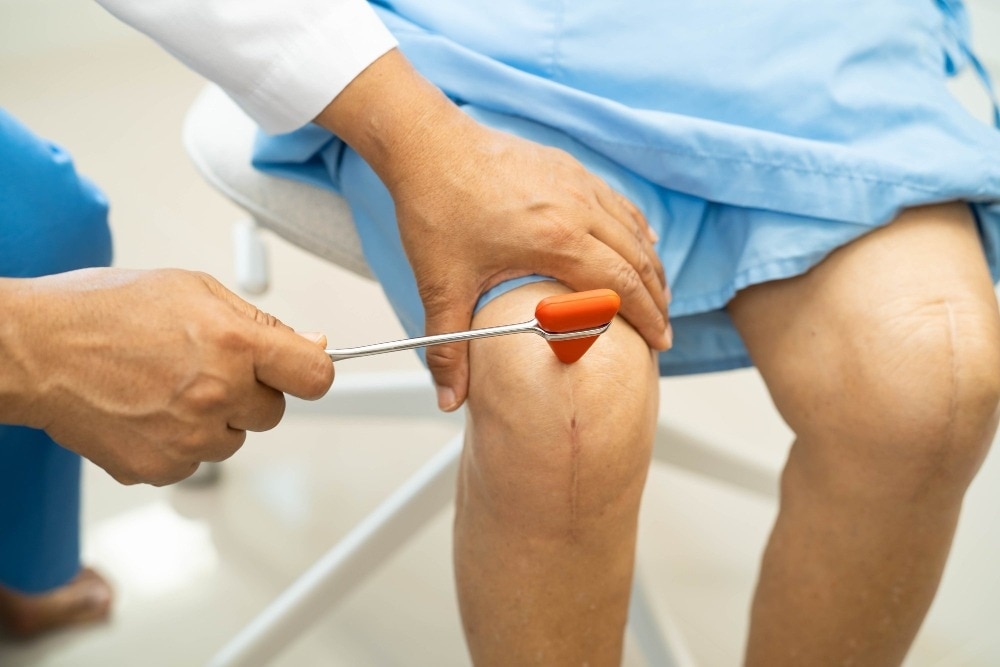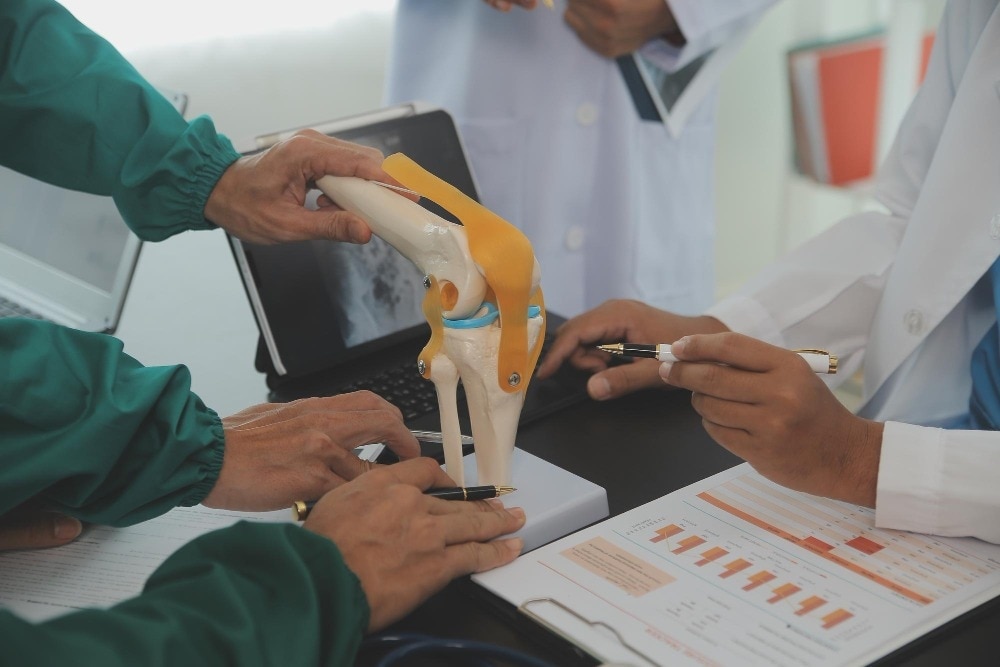
An injured tendon does not automatically need an operation, but an open wound, sudden loss of active movement, or suspected complete rupture needs prompt medical assessment. You will learn how clinicians judge the tear, compare surgery with structured non-surgical treatment, and recognise the factors that make repair urgent, useful, difficult, or unsuitable.
Key takeaways
- Seek urgent care after a deep cut near a hand, wrist, ankle, or knee.
- A physical examination and imaging help distinguish partial from complete tendon tears.
- Small or partial tears may heal with immobilisation and guided rehabilitation.
- Surgery depends on the tendon, tear severity, function, timing, and overall health.
Which tendon injuries need urgent surgical assessment?
Seek urgent tendon injury assessment after a deep cut, especially when it crosses the hand, wrist, ankle, or knee. An open tendon injury can expose a visible tendon, contaminate the wound, and sever nearby nerves or blood vessels. Do not probe the wound or wait for routine imaging.
Warning signs include:
- Loss of active movement: you cannot bend or straighten a finger, lift the wrist, raise the arm, or straighten the knee.
- Sudden inability to push off while walking, point the foot downward, or climb stairs, suggesting an Achilles or other complete rupture.
- A major deformity, a new hollow or gap along the tendon, or rapid swelling after a forceful injury.
- Numbness, pale or cold skin, uncontrolled bleeding, or a finger or limb that cannot move normally.
- A deep wound with a visible tendon, even if pain is limited.
| Finding | Why it matters | What to do |
|---|---|---|
| Open cut with visible tendon | The tendon, nerve, or vessel may be divided | Seek emergency assessment promptly |
| Sudden loss of active movement | A complete rupture or major laceration may have disconnected the muscle from the joint | Arrange urgent surgical assessment |
| Closed mallet finger with preserved movement | Many injuries respond to continuous splinting | Obtain prompt clinical review; it is not automatically an operation |
| Long-standing shoulder pain with an MRI tear | Degenerative rotator-cuff tears are not usually emergencies | Arrange routine assessment unless weakness or function deteriorates suddenly |
How do doctors confirm whether a tendon is partly or completely torn?
Doctors distinguish a partial tendon tear, complete tendon rupture, and another injury by combining the injury history with examination findings, not by relying on a scan alone. The clinician checks where pain began, whether there was a snap or direct cut, and which movement immediately became difficult.
Active movement testing shows whether the tendon still transmits force. A person with a partial tear may move the joint, although pain or weakness limits the range. A complete tendon rupture can cause loss of a specific movement, such as standing on tiptoe after an Achilles rupture or straightening the knee after a quadriceps-tendon rupture.
Strength testing adds detail, but pain can make an intact tendon appear weak.
| Finding | Partial tendon tear | Complete tendon rupture | Another injury |
|---|---|---|---|
| Active movement | Present but painful or weak | Lost or severely reduced | Pattern depends on the injury |
| Strength testing | Reduced, with some force remaining | Markedly reduced or absent | Weakness may reflect pain, nerve damage, or muscle injury |
| Examination shape | Local tenderness and swelling | A palpable gap or changed contour may occur | Bruising, joint instability, or bone tenderness may point elsewhere |
Ultrasound can show a split or incomplete tendon and reveal discontinuity or retraction. MRI maps the tear, tendon gap, muscle damage, and nearby structures when the diagnosis or extent remains uncertain. X-rays help identify a fracture or avulsion but do not show the tendon itself clearly.
A Thompson test supports an Achilles rupture diagnosis; imaging is not automatically needed when examination findings are clear.
When can non-surgical treatment work instead of tendon repair?
A partial tendon tear does not automatically need repair. Non-surgical tendon treatment is reasonable when the tendon still works, weakness is limited, and symptoms improve with protection and structured rehabilitation rather than continuing to worsen.
Choose this approach when:
- You can actively move the affected joint or body part, even if movement is painful.
- The tear is partial, with little or no tendon retraction or gap.
- Strength remains adequate for daily activities and your required work or sport.
- Pain and function improve during a monitored trial of treatment.
Rest means stopping the movement that provokes pain, not keeping the joint completely still for weeks. Activity modification, splinting, and anti-inflammatory pain relief can settle symptoms while protecting the tendon; use anti-inflammatory medicines only when they are safe with your medical history and other medicines. Physiotherapy then restores controlled movement, strength, and load tolerance.
The plan needs review if weakness persists, function remains restricted, or pain returns when activity increases. A small partial quadriceps or patellar tendon tear with preserved active knee straightening can often avoid surgery, while a complete rupture that prevents active movement usually cannot.
Selected acute Achilles ruptures can also be managed with a supervised functional rehabilitation protocol, although surgery and non-operative care involve different risks.
What factors determine whether tendon repair surgery is necessary?
A complete tear is not, by itself, a yes to surgery. The tendon involved, tear pattern, and resulting loss of function matter more than the scan alone. A small partial tear with useful strength can improve through structured rehabilitation, while a fully divided tendon that prevents joint movement needs prompt specialist review.
- Tendon and zone: A hand flexor tendon laceration usually needs repair because the cut ends retract and scar, preventing normal finger flexion. An Achilles tendon rupture has more than one acceptable pathway, including supervised functional rehabilitation.
- Tear size and location: A large full-thickness tear, a critical tendon zone, or a gap that cannot heal in contact raises the case for surgery.
- Tendon retraction: Widely separated ends are harder to bring together and may require earlier repair before shortening and scarring develop.
- Tissue quality: Frayed, degenerated, infected, or crushed tendon holds sutures poorly, changing direct repair into a reconstruction or staged plan.
- Patient demands: Occupation, hand dominance, sport, age, and the need for powerful movement influence the tendon repair surgery decision.
- Timing: An open cut or sudden functional loss needs urgent assessment; delayed treatment can increase retraction and stiffness.
For an acute Achilles tendon rupture, surgery may suit a young, highly active person, a large gap, severe push-off weakness, delayed presentation, or re-rupture. Smoking, diabetes, poor skin condition, other illnesses, and the ability to complete rehabilitation can make non-operative care safer. The recommendation balances expected function against wound, infection, nerve, and re-rupture risks.
What happens when a tendon needs repair, reconstruction, or specialist planning?
A tendon needing surgery does not always receive a simple stitch. The plan depends on whether the ends can meet, whether the tissue is healthy, and how long the injury has been present.
1. Before surgery, tendon repair preparation includes a physical examination, review of ultrasound or MRI images, medication instructions, and planning for anaesthesia and postoperative support. Ask how long you will need a splint or brace, when driving is allowed, and who will guide rehabilitation.
2. During surgery, the surgeon brings a repairable tendon back to its attachment and secures it with sutures or anchors. A complete quadriceps tendon rupture or patellar tendon rupture commonly needs this approach because a disconnected knee extensor mechanism prevents active straightening.
3. Direct repair becomes unsuitable when the tendon is chronic, severely retracted, degenerated, infected, or too damaged to hold stitches. The discussion may then include tendon grafting, tendon transfer, staged treatment for infection, reconstruction, or joint replacement. These are not simply stronger versions of a routine repair.
4. Recovery starts with protection and controlled movement, not immediate strengthening. Physiotherapy gradually advances to resistance work over weeks or months; lifting, throwing, running, or returning to sport too early raises the risk of elongation, stiffness, re-tear, or lasting weakness.
5. An MRI abnormality alone does not decide on rotator cuff tear surgery. Persistent pain with clinical weakness, loss of function, an acute traumatic full-thickness tear, and repairable tissue carry more weight than the scan alone. The business can help coordinate specialist planning when examination, imaging, and rehabilitation history point to different choices.
Related service
Tendons connect muscles to bones and transmit the force needed for movement. View service → |
Frequently asked questions
Which tendon injuries need urgent surgical assessment?
Seek urgent assessment after a deep cut crossing the hand, wrist, ankle, or knee, especially if a tendon is visible or movement is lost. Open wounds can damage tendons, nerves, and blood vessels and need prompt specialist care.
How do doctors confirm whether a tendon is partly or completely torn?
Doctors assess active movement, strength, pain, swelling, and the gap or loss of function caused by the injury. Ultrasound or MRI can show tendon damage when the examination does not establish whether the tear is partial or complete.
When can non-surgical treatment work instead of tendon repair?
Non-surgical treatment can suit selected partial tears and closed injuries when useful tendon function remains. Treatment may include immobilisation, activity changes, pain control, and a structured rehabilitation programme.
What factors determine whether tendon repair surgery is necessary?
The decision depends on the tendon involved, whether the tear is partial or complete, the injury mechanism, wound contamination, loss of function, time since injury, and your health and rehabilitation needs.
What happens when a tendon needs repair, reconstruction, or specialist planning?
A surgeon may reconnect the torn tendon directly when the ends can meet safely. Reconstruction is considered when tissue is missing, scarred, or too damaged for direct repair, and complex injuries may require staged specialist planning.